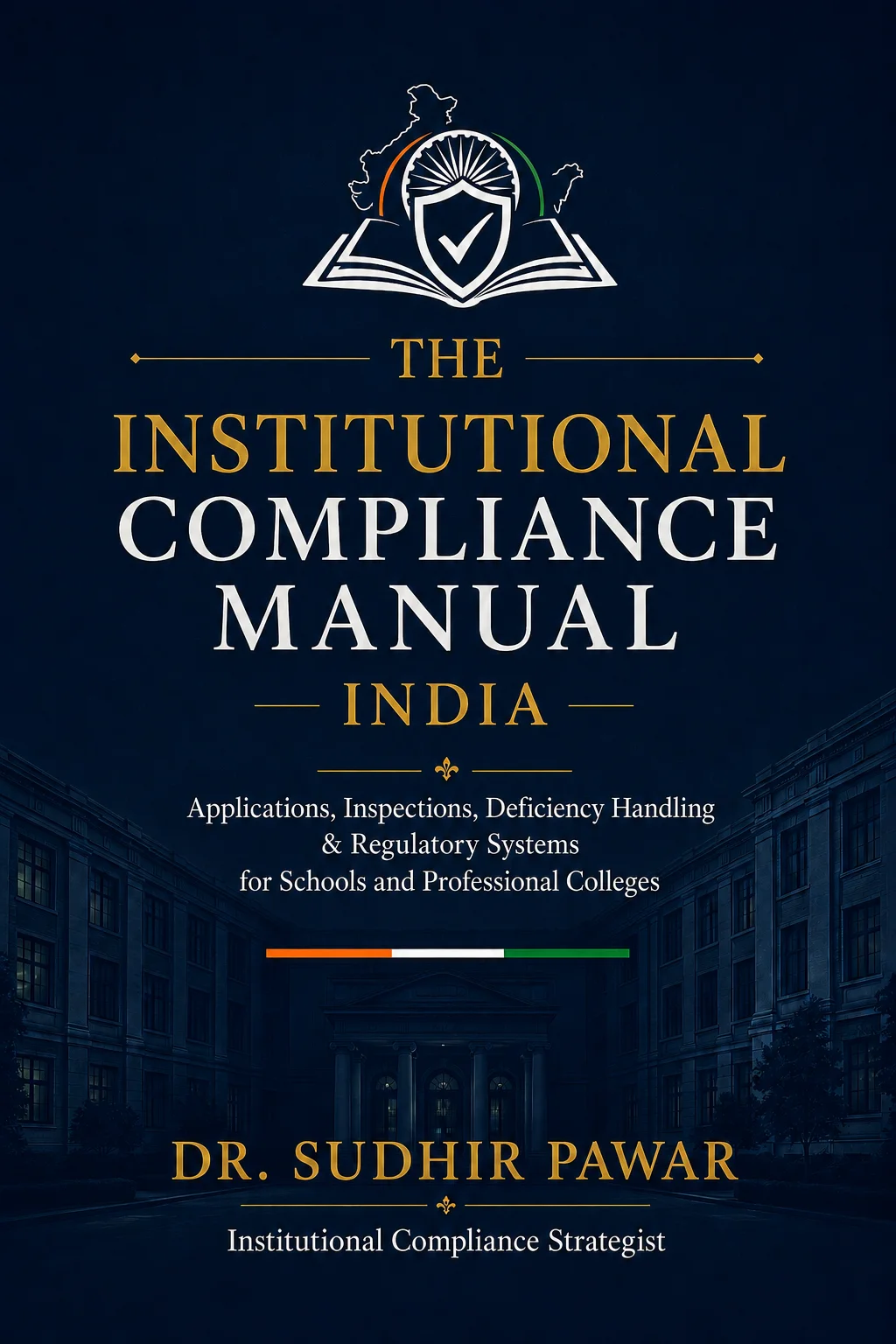
College Establishment & Approval Support
A single starting point for establishing pharmacy, nursing, paramedical and law colleges. The regulator, norms and process differ by course and by state — we help you identify the right route and prepare for it.
Guidance led by professionals with more than 20 years of institutional experience.
Which college are you planning?
Each stream is regulated differently. Open the page for your course for the specifics that apply to it.
Pharmacy college
D.Pharm & B.Pharm setup with Pharmacy Council of India (PCI) norms and university affiliation.
PharmacyNursing college
GNM and B.Sc Nursing setup with Indian Nursing Council (INC) and state nursing council norms.
NursingParamedical college
Allied health science courses with state health/education norms and clinical tie-ups.
ParamedicalLaw college
LL.B and integrated law programmes with Bar Council of India (BCI) norms and university affiliation.
LawThe regulator and process differ by course and state
There is no single universal checklist for “a college”. The relevant council, the university affiliation, the state permission and local approvals all depend on the course you offer and where you operate.
PCI
Pharmacy Council of India — norms for pharmacy programmes.
INC
Indian Nursing Council — norms for nursing programmes, alongside the state nursing council.
BCI
Bar Council of India — norms for legal education, with university affiliation.
State councils & universities
State permissions, affiliating universities and local approvals vary by state.
Eligibility & preliminary readiness
Common factors apply across colleges, while course-specific norms are covered on each dedicated page.
Legal & entity readiness
- A registered society, trust or Section 8 company with education-enabling objects
- Land held by the entity through ownership or a long-term lease
- Financial capacity appropriate to the course and student intake
Common planning requirements
- Building plan aligned to the relevant council’s space norms
- Discipline-specific laboratories, library and support facilities
- Fire safety, building stability and accessibility provisions
Varies by course / state
- Which council or councils apply and in what sequence
- Minimum land, built-up area and lab norms for the specific programme
- Faculty qualifications, ratios and clinical / practical tie-ups
Documents generally required
- Society / trust / Section 8 registration and governing documents
- Land ownership or lease documents in the entity’s name
- Approved building plan and completion / occupancy certificate
- Fire safety NOC and building-stability certificate
- Financial statements and funds-availability proof
- Faculty and staff details with qualifications
- Course-specific facility, equipment and tie-up documents
Exact requirements may vary according to the authority, state, course, institution type and current rules.
How a college project typically progresses
Feasibility & course selection
Demand study, course and location decisions, and identifying the applicable regulator(s).
Legal entity & land readiness
Entity formation or review and verification of land documentation.
Infrastructure planning
Aligning building, laboratories and facilities to the relevant council’s norms.
Council & university applications
Preparing council permission and university-affiliation submissions in the correct order.
Faculty & academic readiness
Recruitment planning, lab setup and academic-record preparation.
Inspection & recognition
Documentation review, mock-inspection readiness and ongoing compliance guidance.
Common compliance risks in college setup
- Applying under the wrong regulator or in the wrong sequence
- Infrastructure or lab space that does not meet council norms
- Incomplete land title or land-use documents
- Faculty qualification or ratio shortfalls
- Missing mandatory certificates or clinical/practical tie-ups
- Inconsistent financial or academic records
- Late or incomplete permission / affiliation submissions
How Legal SR Worlds assists
- Identifying the applicable regulator(s) for your course and state
- Feasibility, entity and land-documentation guidance
- Mapping council- and university-specific norms to your project
- Assistance preparing permission and affiliation submissions
- Faculty, facility and inspection-readiness support
- Ongoing compliance and renewal guidance
Legal SR Worlds provides advisory, documentation and preparation support. Final approval, recognition, affiliation or registration remains subject to eligibility, documentation, inspection and the decision of the relevant authority.
Frequently asked questions
Is there one common approval for all colleges?
Which regulator applies to my college?
Do you guarantee approval or affiliation?
Related services
Discuss Your Institution’s Current Compliance Stage
Share where your institution stands today and receive a free preliminary review of the approvals, affiliations, documentation and compliance steps that apply to your situation.
Preliminary reviews are guided by Dr. Sudhir Pawar and a team with more than 20 years of institutional experience.
Final approval, recognition, affiliation or registration remains subject to eligibility, documentation, inspection and the decision of the relevant authority. This page is informational and does not constitute a guarantee of outcome.